Conversations beyond the curriculum
Every Friday, SciCoW students met a guest whose work connects computing with science. These interview-style sessions focused on the path behind the job: how each speaker learned to code, where those skills opened doors, what their work looks like now, and what they wish beginning programmers knew.
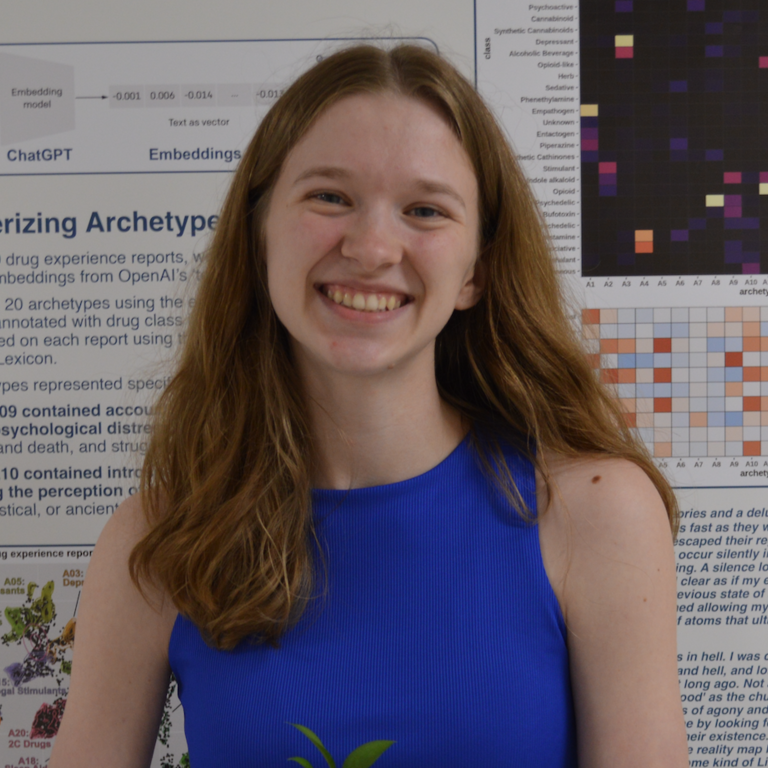
01 / Biology → agriscience
Courtney Ries
Business Analyst · Corteva Agriscience
Courtney graduated from the University of Iowa in 2024 with a biology major and minors in computer science and dance. She participated in the 2021 SciCoW pilot, completed a bioinformatics internship at the Iowa Institute for Human Genetics, and conducted wet-lab and computational research in the Michaelson Lab.
She spoke with students about growing into coding gradually, finding opportunities that value both biological and technical knowledge, and using those skills while working with laboratory data systems in the agriscience industry.
LinkedIn profile ↗
02 / Genomics → biotechnology
Muhammad Elsadany, PhD
Associate Manager, Clinical Informatics · Regeneron Genetics Center
Muhammad studied computational biology and genomics at Zewail City in Egypt before earning his PhD through the University of Iowa Interdisciplinary Graduate Program in Genetics. His doctoral work in the Michaelson Lab integrated genetic, clinical, neuroimaging, language, and other complex data to study cognition and mental health.
He discussed how an interdisciplinary computing foundation shaped his research, the transition from graduate training to biotechnology, and the tools and problem-solving habits he now applies to clinical and genetic data.
LinkedIn profile ↗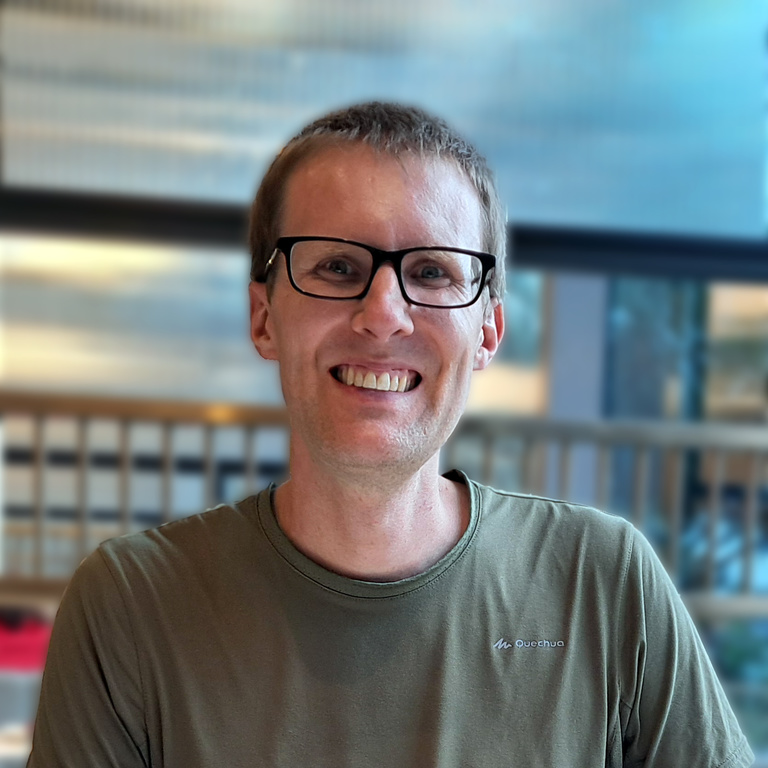
03 / Algorithms → AI-era learning
Erik Krohn, PhD
Professor of Instruction · University of Iowa Computer Science
Erik teaches computer science and studies algorithmic foundations and computer science education. His background spans computational geometry, algorithms, compilers, programming languages, data science, and the teaching of core computing concepts.
He invited students to look beyond code generation and consider why algorithmic thinking still matters: framing problems, checking correctness, debugging, and using AI as a learning partner without giving up the thinking that builds durable skills.
University of Iowa profile ↗Looking for an earlier cohort? Speaker lineups are preserved with each year in the program archive.